Why your body loves standing at the office

On a busy day at the office, the desk chair quickly becomes the place we spend most of our time. We sit through the morning meeting, in front of the screen, during the lunch break and on the drive home. But the human body isn't built to be locked in the same seated position for 8 hours a day.
Switching from a sitting to a standing work position is one of the simplest and most effective habit changes you can make for your body and your mental energy. Here's what actually happens in your body and mind when you take your work to standing height.
1. What happens in the body?
Relief for your lower back and neck
When we sit – especially when we slump a little in front of the screen – the pressure on the discs in the spine rises significantly. When you stand up, your spine regains its natural S-curve, which reduces tension in your lower back, shoulders and neck.
Activating your circulation and metabolism
If you sit still for more than 30 minutes at a time, your body's production of the enzymes that break down fat and sugar in the blood drops. Simply standing up activates the large muscle groups in your legs, glutes and core, which gets your blood circulation and metabolism going.
Less fatigue in joints and tendons
Standing work creates natural micro-movement. You shift your weight from one leg to the other, which keeps your joints flexible and prevents the stiffness many people feel towards the end of the workday.
2. What happens in the mind and brain?
More oxygen to the brain = sharper focus
The increased blood circulation from standing work sends more oxygen and nutrients straight to the brain. It counteracts the classic "post-lunch slump" and gives you renewed energy for complex tasks.
Better mood and less stress
Physical inactivity is linked to lower energy levels and a higher risk of mental fatigue. When the body is active, it releases endorphins, which boost your mental energy and make a busy day easier to handle.
More dynamic meetings
Standing meetings or standing work create a completely different dynamic. We make decisions faster, communicate more directly and stay engaged for longer at a time.
How to get started (without getting sore feet)
It's not about standing for 8 hours from day one – it's about variety.
Start in small intervals: Begin with 15–20 minutes at a time, for example whenever you answer emails or take a phone call.
Change position often: The best working position is always the next one. Switch between sitting, standing and walking around a little.
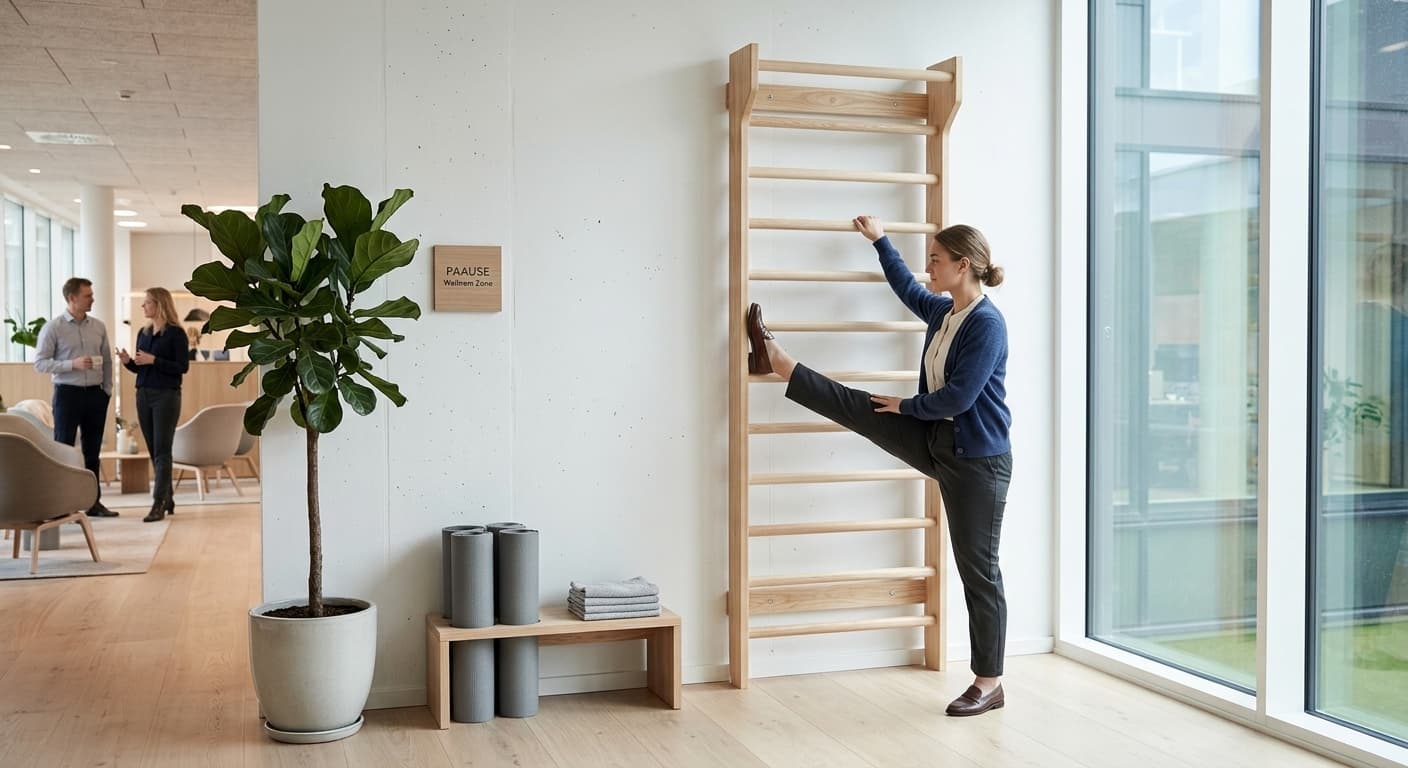
Make your micro-breaks active: Spend 2 minutes stretching your body or doing a few light exercises while you're standing up anyway.
Standing work is only the first step
Varying your working position at your desk is a great foundational habit. But staying free of injuries, tension and sick days in the long run also takes active recovery and targeted movement throughout the week.
That's exactly why we created PAAUSE – an integrated health zone right in the office, where you and your colleagues can easily reset your body, loosen up and recharge during the workday.